Broken Business Websites vs Professional Business Websites: What Does Every Business Owner Need to Know?
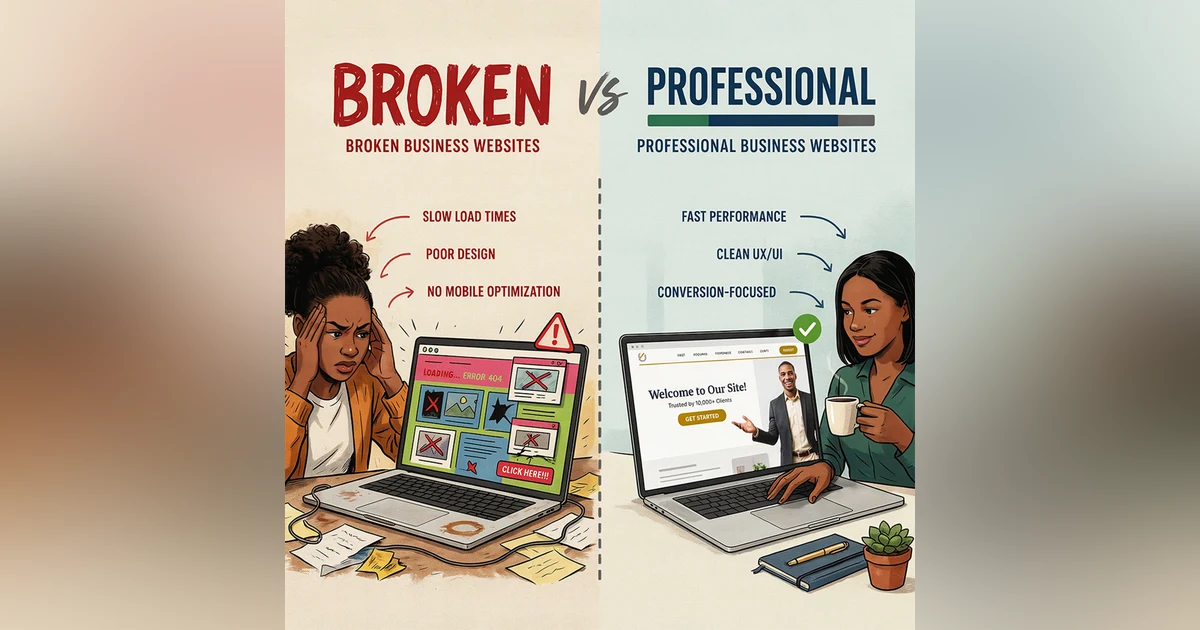
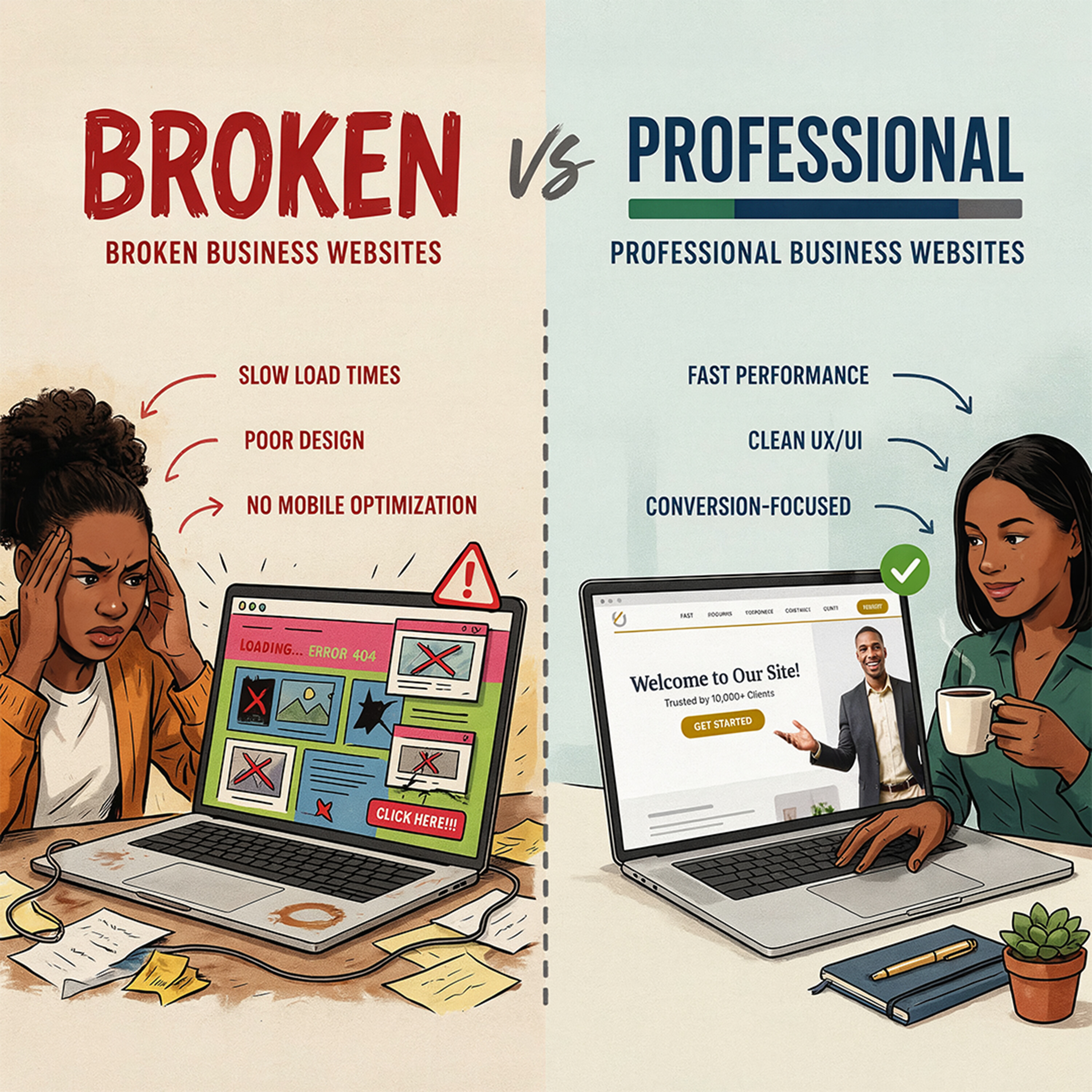


Favour Obasi-ike, MBA, MS frames the discussion around the core distinction: broke (or broken) business websites vs pro (professional) business websites. A “broke” site often lacks structure, SEO, technical setup, and consistently underperforms, whereas a professional site is organized, optimized, and positioned for visibility, lead generation, and business growth 00:00:03, 00:05:16.
Who Is This For?
This episode is for business owners, entrepreneurs, and marketers—especially those responsible for their company’s website and digital visibility. If you want practical, plain English insights into why your site isn’t performing, how to spot technical flaws, and how to finally turn a “broken” website into a professional, revenue-driving asset, this is for you.
Key Moments & Timestamps
Intro & Website Audit Tools:
00:00:03 - [Favour Obasi Ike] introduces the concept of "broke" vs. "pro" business websites and tools like Siteliner.com and GTMetrix to self-audit your site.
Technical SEO & Why Sites Don’t Rank:
00:05:00 - 70% of ranking problems are technical, not content-based.
00:07:00 - Explains the impact of page speed, broken links, and crawl errors.
Site Architecture & Structure:
00:12:06 - A “pro” site has a solid checklist, logical URL structure, all main pages (home, about, contact, etc.), and no duplicates or broken paths.
Importance of Social, Content, and Indexing:
00:10:15 – Social profiles now connect with Google Search Console; cohesive digital presence is critical.
00:33:05 – Explains sitemaps, robots.txt, and how to check what pages Google sees vs. your actual site.
Schema, Quality Content, and Velocity:
00:48:23 – Why schema (structured data) is often missing and critical for SEO.
01:11:28 – Content must attract and repel with clarity; use action-oriented headlines and answer real user questions.
Budgets, DIY, and Final Advice:
01:05:01 – Discusses real costs for professional sites, why you must invest money or time, and how “broke” sites result from neglect.
01:23:29 – Final takeaways: clarity in copy, investing in continual learning, and practical analytics checks.
Summarize
Technical SEO is usually the culprit for low rankings—not just content issues.
Site speed, mobile performance, clean architecture, and meta info (titles, descriptions) matter much more than flashy design.
Sitemaps and robots.txt must be properly configured, or Google may ignore much of your site.
Schema markup is almost always missing on poorly performing sites and can boost visibility.
Consistent, high-quality content (using real user questions as headline structure) increases both visibility and engagement.
Organic social and SEO now interact—Google draws from your digital presence as a whole.
DIY is an option, but you must invest time if you can’t invest money.
Monitor click-through and conversion metrics (above 2% is good; below, revisit your site’s value/clarity).
FAQs
Q: What free tools can I use to audit my site?
A: Siteliner.com checks duplicate/broken pages; GTMetrix.com measures speed; NSLookUp.io checks domain health.
Q: What’s the most common reason websites don’t rank?
A: Technical SEO issues: slow speed, crawl errors, missing/incomplete sitemaps, improper robots.txt, lack of schema.
Q: Is a newsletter/blog/journal page worth it?
A: Yes—having unique, frequently updated content (news, blogs, resources) helps with indexing, authority, and user engagement 00:43:10.
Q: Can I get a professional site cheaply?
A: Investing either time (DIY, free learning resources) or money (professionals, payment plans) is required.
Q: What defines a “pro” website?
A: Fast, mobile-first, well-structured, SEO-optimized, schema’d, secure, maintained, and delivers what users expect—every time.
Action Steps
- Audit your site using Siteliner, GTMetrix, and NSLookUp to identify technical flaws (00:01:38).
- Create or download a checklist for on-page, off-page, technical, and local SEO (00:05:48).
- Clean up your site map and robots.txt.
- Apply schema markup to each main page (00:48:23).
- Ensure all key pages exist: home, about, contact, products/services, privacy, FAQ, blog/newsletter (00:13:51).
- Update your titles/descriptions to include search terms and local info; keep within pixel/character limits (00:29:13).
- Track your conversions; if below 2%, revisit clarity, speed, mobile, and copy (01:27:24).
- Invest in learning if budget is tight (use LinkedIn Learning, online resources) or hire a pro with phased payments.
- Monitor progress and repeat regular checks to maintain a “pro” business website.
For more strategies, connect directly via the podcast resources shared at the conclusion of the episode.
📥 Join our exclusive SEO newsletter: https://workandplayentertainment.myflodesk.com/seo-marketing-strategy-zoom-call
Ready to Rank? Book Your SEO & Web Dev Services Today
🧠 Book SEO Services with Favour Obasi-ike: https://calendly.com/flaevbeatz/marketing-strategy-zoom-call
🧠 Read Articles: https://www.playinc.online/newsfeed
🧠 We Don't PLAY Podcast: https://wedontplaypodcast.com
🧠 Favour Obasi-ike Quick Links: https://zaap.bio/flaevbeatz
Explore Free Marketing Resources to Grow Your Business
📑 SEO: https://www.playinc.online/newsfeed/categories/seo
📑 Clubhouse Audio: https://www.playinc.online/newsfeed/categories/clubhouse
📑 Pinterest SEO: https://www.playinc.online/newsfeed/categories/pinterest
📑 Marketing: https://www.playinc.online/newsfeed/categories/marketing
📑 Podcast: https://www.playinc.online/newsfeed/categories/podcasts
📑 Social Media: https://www.playinc.online/newsfeed/categories/social-media-tips
📑 Billboards: https://www.playinc.online/newsfeed/categories/billboards
📑 Work and PLAY Entertainment Newsfeed: https://www.playinc.online/newsfeed/categories/newsfeed
See Privacy Policy at https://art19.com/privacy and California Privacy Notice at https://art19.com/privacy#do-not-sell-my-info.


