AI SEO Strategy 2026: Closing Prompt Gaps and Keyword Gaps for Brand Domain Authority with Favour Obasi-ike

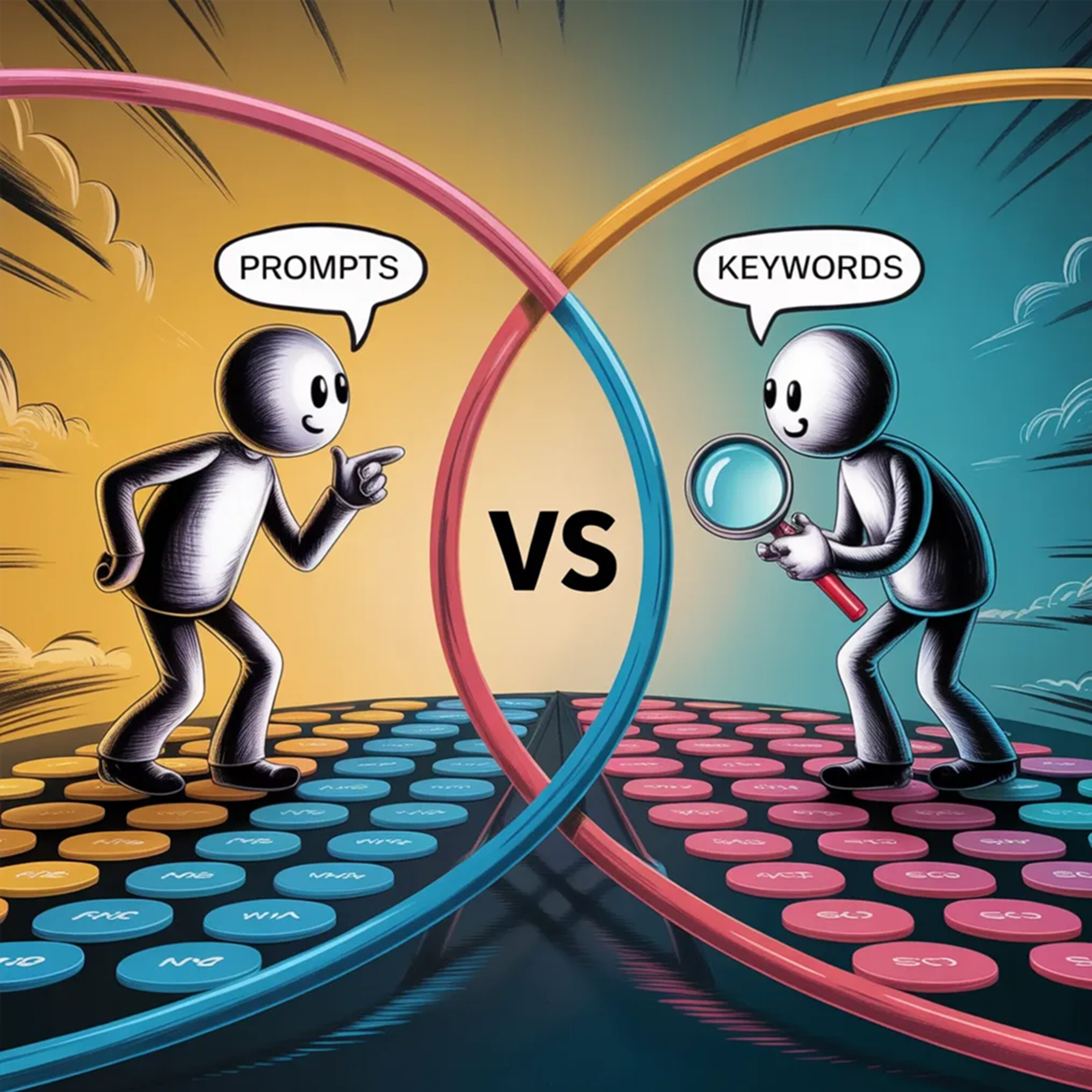



In this insightful episode of the We Don’t PLAY!™️ Podcast, host Favour Obasi-ike, MBA, MS demystifies the critical evolution of search in the age of artificial intelligence, focusing on a concept she terms "AI SEO 101." The central theme revolves around the distinction and strategic importance of closing both prompt gaps and keyword gaps to secure valuable brand citations.
While traditional SEO has focused on optimizing for short, fragmented keywords (e.g., "best travel deals"), the rise of conversational AI assistants like ChatGPT and Perplexity has given birth to the prompt—a longer, full-sentence query (e.g., "What are the best international travel deals for a family of four in summer 2026?").
Favour argues that many businesses are unprepared for this shift, leaving a "prompt gap" in their content strategy. While they may have content targeting keywords, they lack the in-depth, conversational, and authoritative answers that AI models seek when responding to user prompts. The ultimate goal for any brand is to become a direct brand citation in an AI-generated answer, a feat achieved only by providing comprehensive, well-supported information. As Favour compellingly states, the answers provided by AI are sourced directly from the content available on the web: "Where are those responses AI is getting coming from in the first place? They’re coming from your website."
The core of the strategy lies in recognizing that your website is the foundational pillar of your digital presence. To bridge the prompt gap, Favour advocates for a robust pillar-cluster content model. This involves creating a main "pillar" page that exhaustively answers a primary customer question, supported by numerous "cluster" pages that explore related sub-topics in detail. This creates a dense, interconnected web of expertise that signals authority to search engines and AI alike. The episode emphasizes a shift from merely creating blogs to creating comprehensive resource hubs, complete with FAQs, multimedia content, and evidence-backed claims, much like a digital research paper.
Favour provides a clear action plan: identify the core questions your audience is asking, build out content that answers them conversationally and in-depth, and structure this content logically on your website. She also touches on the technical side, noting that URLs should remain concise and keyword-focused, while the content on the page should be rich and prompt-focused.
Ultimately, the episode is a powerful call to action for businesses to stop dwelling on information and start implementing a forward-thinking content strategy. By treating your website as a definitive library of answers, you can close the gaps in your SEO strategy and ensure your brand not only survives but thrives in the new era of AI-powered search.
Key Takeaways
- Prompts vs. Keywords: A prompt is a conversational, full-sentence question (10-25 words) posed to an AI, whereas a keyword is a short, fragmented search query (2-5 words) used in traditional search engines.
- The Goal is Brand Citation: In the new landscape of AI search, the primary objective is to have your brand and website cited directly as the authoritative source in an AI-generated answer.
- Your Website is the Foundation: All digital roads lead back to your website. It is the most critical asset for building authority and providing the in-depth answers that AI models are looking for.
- Close the Prompt Gap with Conversational Content: To appear in AI search results, you must create content that directly and comprehensively answers the full questions your audience is asking, not just targets keywords.
- Adopt a Pillar-Cluster Model: For each major question your audience has, create one main "pillar" page with a complete answer and support it with multiple "cluster" pages that cover related sub-topics. This builds a powerful web of expertise.
- Content as a Resource Hub: Think of your content less like a series of blog posts and more like a library of research. Support your answers with data, evidence, multimedia, and links to other authoritative sources to build trust and credibility.
- Action Over Acronyms: While understanding terms like AEO (Answer Engine Optimization) is useful, the focus should be on the practical implementation of creating high-quality, question-answering content.
Memorable Quotes
- "A prompt is keywords in confirmation of the context that has been started by conversation."
- "You can’t say a brand without connecting a website."
- "Where are those responses AI is getting coming from in the first place? They’re coming from your website."
- "Don’t be in a place where you’re dwelling on information and not taking action on implementation."
- "15% of new searches every day out of at least 8.5 billion searches a day are new, including yours."
- "You don’t put a prompt in your URL, you put a keyword in your URL."
- "You’re not just creating blogs, you’re creating calls to action."
Frequently Asked Questions (FAQs)
- What is the main difference between a prompt and a keyword? A prompt is a long, conversational question asked to an AI, while a keyword is a short, fragmented phrase used in a traditional search bar. Your content strategy needs to address both.
- Why are brand citations important in AI SEO? A brand citation is when an AI search tool names your website as the source of its information. It positions your brand as a trusted authority, driving traffic and credibility.
- Is blogging still relevant in 2026? Yes, absolutely. However, the format has evolved. Modern blogging should focus on creating in-depth, conversational articles that function as answers to user prompts, effectively turning your blog into a resource hub or "audio blog."
- How do I start closing the prompt gap on my website? Begin by identifying the most common and important questions your customers ask. Then, create comprehensive content (like a detailed FAQ page or a pillar article) that answers these questions thoroughly and links to supporting cluster pages.
- What is the pillar-cluster model? It’s a content strategy where you create one major "pillar" page that covers a broad topic in-depth. You then create multiple "cluster" pages that address specific sub-topics related to the pillar, with all cluster pages linking back to the main pillar page. This structure organizes your content and signals deep expertise to search engines.
Timestamps
- [00:00] Introduction: AI SEO 101 - Prompt Gaps vs. Keyword Gaps.
- [01:35] Defining a "Prompt": A conversational query of 10-25 words.
- [02:48] Defining a "Keyword": Traditional short, medium, and long-tail search terms.
- [05:52] The Central Role of Your Website in Brand Citations.
- [06:34] How Search Engines Match Pages to Queries.
- [07:17] Core Concept: A prompt is "keywords in conversation."
- [08:03] The Solution: Closing the gap with conversational, FAQ-style content.
- [09:43] Strategy Deep Dive: The Pillar-Cluster content model (1 Pillar + 9 Clusters).
- [15:02] Where AI Gets Its Answers: Your website is the source for LLMs.
- [16:02] Building Authority: Go beyond facts and support claims with experience and evidence.
- [19:00] Your website is the common thread in all customer interactions.
- [20:44] Technical SEO Tip: Use keywords in your URLs, not long prompts.
- [22:36] Market Opportunity: 15% of the 8.5 billion daily searches are entirely new.
- [23:38] Content with Purpose: Your content should create calls to action, not just exist as a blog.
- [24:14] Closing Remarks & How to Connect.
- [25:12] Podcast Outro.
Book SEO Services | Quick Links for Social Business
>> Book SEO Services with Favour Obasi-ike
>> Visit Work and PLAY Entertainment website to learn about our digital marketing services
>> Purchase Flaev Beatz Beats Online
>> Favour Obasi-ike Quick Links
See Privacy Policy at https://art19.com/privacy and California Privacy Notice at https://art19.com/privacy#do-not-sell-my-info.


