Leadership from the Saddle: What Horses Teach Us About Leading
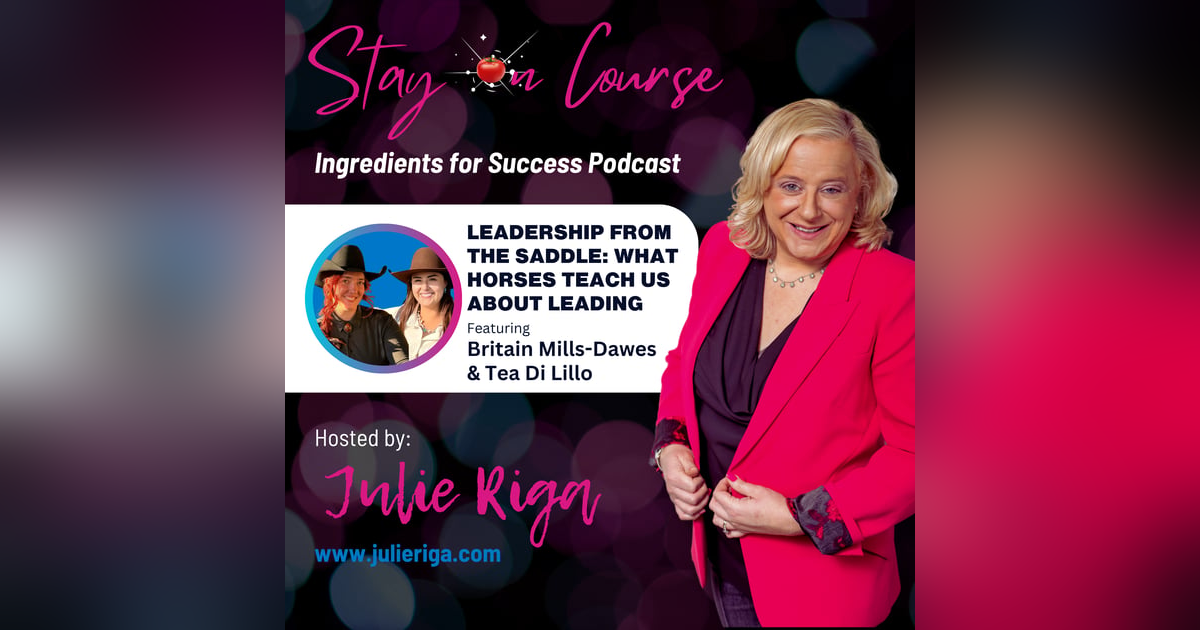


Leadership from the Saddle: What Horses Teach Us About Leading
Guests: Britain Mills-Dawes and Tea Di Lillo Host: Julie Riga
In this episode of Stay On Course, leadership coach Julie Riga is joined by equine practitioner Britain Mills-Dawes and Alberta horse trainer Tea, co-hosts of the Uncinched podcast. Together they explore the leadership lessons hidden between horse and rider: trust, presence, intuition, and the quiet confidence that makes others gravitate toward you. Whether you lead a company, a team, or simply yourself, this conversation will change the way you think about authentic leadership and purpose-driven growth.
Leadership from the Saddle: What Horses Teach Us About Leading
Meet the Guests
Britain Mills-Dawes is an equine practitioner, clinician, and Western media contributor. She educates riders through biomechanics and horsemanship and co-hosts the Uncinched podcast, building community across the horse industry through journalism and live events.
Tea is a horse trainer from Alberta, owner of Qualitea Equine, and a coach for the Calgary Stampede Show Rider team. A lifelong learner and co-host, dedicated to helping both horses and riders reach their full potential.
The Three Ingredients for Leadership Success
Drawing on years of partnership with horses, Britain and Tea share three core leadership ingredients that translate directly from the arena into everyday life and work.
1. Trust and Consistency
Horses are prey animals and their instinct says you might be a threat. Building trust means showing up with positive, intentional energy every single day. The same applies to your team. Stress acts like a predator on the nervous system, and a great leader creates enough safety that people seek guidance rather than hide their anxiety.
2. Presence and Intuition
Riding in the mountains, you learn quickly when to lead and when to follow. The horse senses the terrain in ways you never can from the saddle. True leadership presence means being attuned enough to know which role serves the moment best. In the workplace, that awareness is the difference between micromanaging and genuine mentorship.
3. Communication and Emotional Regulation
Horses cannot lie. Their body language tells you everything. Britain argues it is often easier to communicate with a horse than a human for that reason. For leaders, the lesson is this: create the psychological safety that lets people speak honestly. The ability to walk into a charged situation and lower the emotional temperature without adding to the fire is one of the most valuable leadership skills you can develop.
Memorable Quotes
"Trust is built over time. It is not just showing up every day. It is showing up with intention every single day." Tea
"You have to ride the horse that shows up." Tea
"Leadership is quiet. It is that quiet confidence and self-reflection that people naturally gravitate toward." Britain
Key Takeaways
- Show up with consistent, intentional energy. Trust is a compounding investment, not a one-time gesture.
- Presence is a leadership skill. Know when to guide and when to step back and follow.
- Create psychological safety so your team seeks your guidance rather than hides their struggles.
- Lead by example and with integrity. Quiet confidence draws people naturally to your leadership.
- Great leadership is a give and take. Empower your people to shine where they shine best.
Connect
Britain and Tea: Uncinched on Apple Podcasts, Spotify, iHeartRadio, and most major platforms. Visit stableinstincts.com and follow on
Facebook, Instagram, and TikTok.
Julie Riga: Stay On Course podcast wherever you listen.
#StayOnCourse #LeadershipMindset #AuthenticLeadership #PurposeDriven #LeadByExample
Subscribe to Stay On Course and share this episode with every leader in your world who needs to hear it.


